Rapid Palatal Expander (RPE)
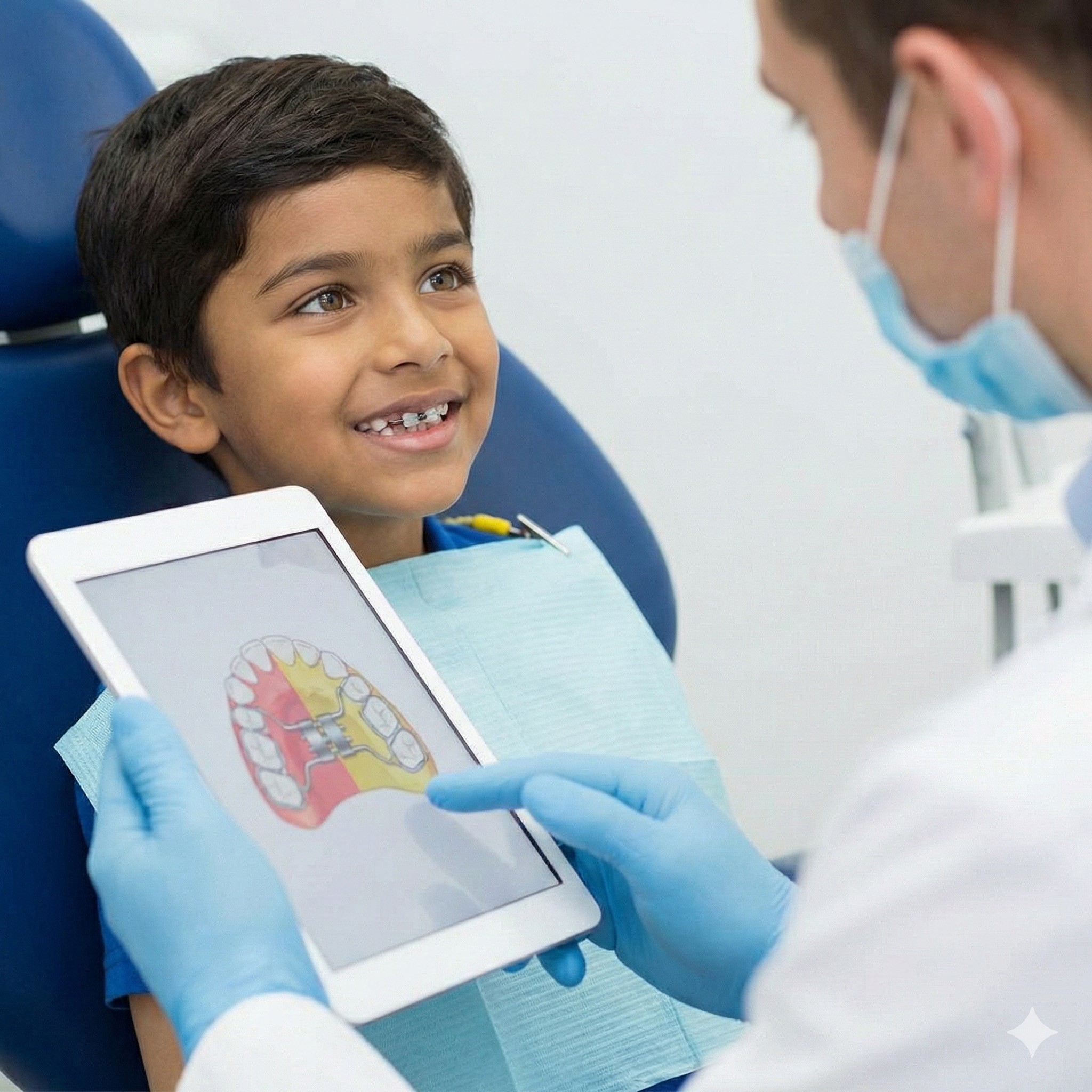
The rapid palatal expander is the most widely used type of orthodontic expander, particularly effective for children between ages 7 and 14. An RPE works by applying controlled outward pressure on the upper molars, which gradually separates the midpalatal suture — the fibrous joint that connects the two halves of the upper jaw.
How the RPE Works
The device is custom-fitted and cemented to the upper back teeth. A small screw mechanism in the centre is activated using a special key, typically 1–2 turns per day. Each turn opens the screw by approximately 0.25mm. Over 2–4 weeks of daily activation, a rapid palatal expander can achieve 5–8mm of expansion — enough to resolve most crossbites and create significant space for crowded teeth.
During active expansion, the midpalatal suture separates and new bone gradually fills the gap. This is why RPE treatment is most effective during childhood, while the suture is still flexible and responsive to orthodontic forces.
Who Is an Ideal Candidate?
Rapid palatal expanders work best for children aged 7–14 who have a posterior crossbite, severe crowding in the upper arch, or a narrow upper jaw contributing to breathing difficulties. Dr. Garima will assess your child's jaw development and suture maturity to determine if RPE is the right approach.
For age-specific guidance, see our pages on palate expanders for children and palate expanders for adults.
Palate Expander Before and After: What to Expect
Understanding palate expander before and after changes helps families prepare for each stage of treatment:
Before Treatment: A narrow upper jaw, posterior crossbite, crowded or overlapping teeth, and potentially restricted nasal breathing.
During Active Expansion (Weeks 1–4): A gap may appear between the front teeth — this is completely normal and actually a positive sign that the palate is widening. The upper arch gradually becomes wider.
After Stabilisation (3–6 Months): The gap between front teeth closes naturally as surrounding teeth shift. New bone fills in the expanded suture. The crossbite is corrected, teeth have more room to align, and many patients notice improved breathing through the nose.
Final Result: A wider, more balanced upper arch that creates the foundation for well-aligned teeth. Most patients then proceed to Phase 2 treatment with braces or aligners for final alignment.
Key Takeaway: The rapid palatal expander is most effective during childhood when the jaw is still growing. Early treatment between ages 7–14 can prevent more complex procedures later and set the stage for a healthier, broader smile.